Wet Drywall Repair in Hampton Park: Step by-Step Restoration
When water hits drywall in your Hampton Park home, the clock starts immediately. Gypsum board acts like a sponge, pulling moisture up the wall through capillary action, and within hours you can have hidden saturation six to twenty four inches above the visible waterline. By hour 48, microbial growth becomes a realistic threat under IICRC S520 guidelines. That is why so many homeowners across central Indiana call Hampton Park Water Restoration in the middle of the night with the same panicked question: do I cut this drywall out, or can it be saved?
Hampton Park Water Restoration has answered that question on thousands of jobs since 2018. We are IICRC certified, BBB A+ rated, and we work directly with every major insurance carrier in Hampton Park. The honest truth is that some wet drywall can dry in place with the right equipment, and some has to come out. If we cannot help, we will tell you directly. Below are the exact questions Hampton Park homeowners ask us when they discover soft, stained, or sagging walls after a pipe burst, appliance leak, storm intrusion, or sewage backup. Read them in order if you are in the middle of an active loss, or jump to the question that matches your situation.
The 7 Step Wet Drywall Decision Process
This is the same order our Hampton Park crews work in. Follow it and you will avoid the two biggest mistakes: painting over a stain that is still wet, and ripping out drywall that could have been dried in place.
- Stop the water source. Shut the main valve, kill the breaker to the affected room, or cap the leak. No drying starts until the source is dead.
- Identify the water category. Clean supply line, gray dishwasher discharge, or black sewage. This dictates everything that follows.
- Measure moisture. A pinless meter tells you how saturated the drywall actually is. Visual guessing is how mold jobs start.
- Check what is behind the wall. Insulation, wiring, and framing. Wet fiberglass batts almost always come out.
- Decide: dry in place or controlled demo. See the criteria below.
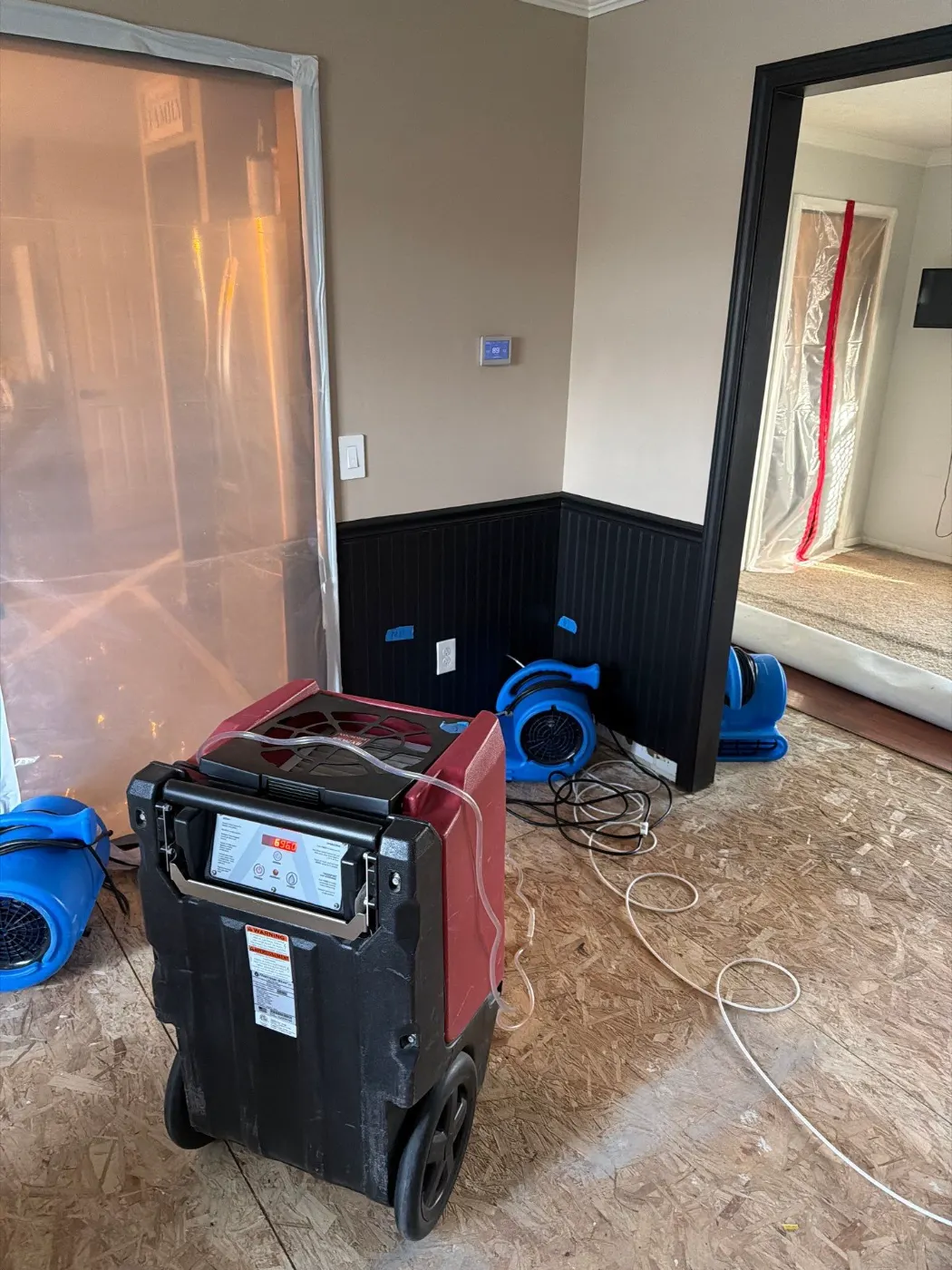
- Set containment and air movement. Plastic, air movers, dehumidifiers, daily readings.
- Rebuild only after framing reads dry. Typically under 16% moisture content.
Signs Your Drywall Can Be Saved
- Water was Category 1 (clean) from a supply line or rain
- The wall has been wet less than 48 hours
- No visible swelling, sagging, or seam separation
- Moisture meter reads below 17% after 3 days of drying
- No insulation behind it, or insulation is dry
- No musty smell developing in the cavity
Signs Your Drywall Has to Come Out
- Category 2 or 3 water touched it (dishwasher, washer, sewage, flood)
- It has been wet longer than 48 to 72 hours
- You can push your finger into it or it is bubbling
- Paint is blistering or paper face is delaminating
- Mold spots, even quarter sized, are visible
- Insulation behind it is wet (vapor barrier traps moisture)
- Ceiling drywall is sagging, full stop. Gravity wins.
For ceiling damage specifically, our guide on ceiling water damage repair and restoration walks through load risks in more detail. Sagging ceiling drywall is a safety issue, not a cosmetic one.
How Hampton Park Water Restoration Handles a Drywall Call
- Phone triage in under 10 minutes, often with same day arrival
- Free on site moisture mapping and photo documentation
- Written scope before any demo, including insurance language
- Daily moisture logs you can hand your adjuster
- Rebuild crew that paints to match, not just patch
We are BBB A+ rated, IICRC certified in Water Damage Restoration and Applied Structural Drying, and have been serving Hampton Park homeowners since 2018. If your situation is small enough to DIY, we will tell you that on the phone. If it involves contaminated water or structural framing, our water damage restoration team can be at your door fast.
Cost Ranges for Wet Drywall Repair in Hampton Park
Numbers vary by access, finish level, and category. These are realistic ranges we see across central Indiana jobs.
- Single small patch (2x2 ft): $250 to $600
- Flood cut and replace, one wall: $600 to $1,800
- Whole room, walls only: $1,500 to $4,500
- Ceiling section (8x8 ft): $800 to $2,200
- Full room with insulation and paint: $3,500 to $8,000
- Category 3 (sewage) drywall remediation: add 30 to 60 percent for PPE, disposal, and antimicrobial treatment
If the source was a covered sudden event like a burst pipe, most of this falls under your dwelling coverage. We document everything in Xactimate so adjusters do not push back. The cost breakdown on our water damage restoration cost page goes deeper into line items.
What Drives Cost Up Beyond the Base Range
- Textured walls: Knockdown, orange peel, and skip trowel all need a matching artist, not just a taper
- Plaster over lath: Older Hampton Park homes often have plaster behind newer paint, doubling demo time
- Lead or asbestos in pre-1980 builds: Testing and abatement required before any cutting
- Two story access: Scaffolding for vaulted ceilings or stairwells
- Wallpaper removal: Almost never restores cleanly after a soak
- Custom trim and crown: Reproduction millwork adds material lead time
What a Flood Cut Actually Is
When drywall has to come out, we rarely demo a full wall. We do a flood cut, which is a controlled horizontal cut typically at 12, 24, or 48 inches above the floor line, depending on how high the water wicked up.
- 2 inch cut: Minor splash, clean water, fast response
- 12 to 16 inch cut: Standard for shallow standing water
- 24 inch cut: Sewage, prolonged exposure, or saturated insulation
- Full sheet removal: Ceilings, sagging walls, mold growth above the wick line
The wick line matters. Drywall pulls water up like a paper towel. You cut above where moisture readings go dry, never right at the visible stain.
Why Cut Heights Are Standardized
Standard drywall sheets are 4x8 or 4x12 feet. Cutting at a stud friendly height makes the rebuild cleaner, faster, and cheaper. Random heights mean wasted material, more seams to tape, and a patch that telegraphs through paint.
- 12 inch line: Hidden by most baseboards after rebuild
- 24 inch line: Lines up with chair rail trim if you want to add one
- 48 inch line: Matches a standard half sheet, easiest seam to feather
- Full wall: Often the right call when more than 60% is wet
Mistakes That Cost Hampton Park Homeowners Thousands
- Painting over a stain before the cavity is dry (mold blooms in 2 weeks)
- Running a box fan and calling it drying (no dehu = no progress)
- Cutting drywall without checking for wires or plumbing first
- Leaving wet insulation in place behind a dry looking wall
- Waiting a week to call, then losing coverage for delayed mitigation
- Hiring a handyman for Cat 3 work without IICRC training
- Using a kilz primer to hide a stain instead of fixing the leak above it
- Skipping containment, then tracking spores into bedrooms and HVAC returns
The Tools We Bring on a Drywall Job
- Pinless and pin moisture meters for drywall and framing
- Thermal imaging cameras to find hidden wet pockets
- Commercial air movers (1 per 150 sq ft of wet surface)
- LGR dehumidifiers sized to the cubic footage
- HEPA air scrubbers for Cat 2 and Cat 3 work
- Antimicrobial sprays approved for occupied spaces
- Negative air containment with 6 mil poly
What to Do in the First 60 Minutes
Before any crew arrives, the actions you take in the first hour set the ceiling on how much can be saved. Work the list in order.
- Kill the water. Main shutoff is usually near the front foundation wall or in the basement.
- Cut power to any room with standing water or wet outlets.
- Photograph everything before you move a single item. Insurance needs the unedited scene.
- Pull furniture and rugs off wet carpet to stop wicking and staining.
- Open cabinet doors under sinks so the cavity can breathe.
- Do not cut holes yet. Wait for a pro to map moisture first, or you may cut in the wrong spot.
- Call your insurer and Hampton Park Water Restoration in that order, ideally within the same hour.
When to stop reading and call a professional
If you have wet drywall right now in Hampton Park, the next four to six hours matter more than the next four to six days. Hampton Park Water Restoration runs 24 7 emergency response across central Indiana, arrives with moisture meters and extraction equipment on the first truck, and documents everything your insurance carrier needs. Call us, send photos, and we will tell you straight whether you need full restoration, a targeted dry out, or just a fan and a dehumidifier from the hardware store. That is the standard we have held since 2018, and it is not changing.
Frequently Asked Questions
Can wet drywall be saved or does it always need replacement?
It depends on water category and how long it stayed wet. In Hampton Park, Hampton Park Water Restoration saves drywall when it is Category 1 clean water under 48 hours old with intact paper face. Category 2 over 48 hours and any Category 3 sewage water requires removal per IICRC S500.
How long does wet drywall take to dry with professional equipment?
Most single room jobs in Hampton Park reach dry standard in 3 to 5 days with proper air movers and dehumidifiers. Hampton Park Water Restoration documents daily readings so you know exactly when drying is complete instead of guessing.
Will my homeowners insurance cover wet drywall repair?
Sudden and accidental water losses are typically covered. Gradual leaks and long term seepage usually are not. Hampton Park Water Restoration provides full IICRC documentation that Hampton Park adjusters need to approve your claim quickly.
What happens if I just paint over the water stain?
The moisture stays trapped behind the paint, mold develops within 24 to 72 hours, and you end up paying for both the failed paint job and the eventual mold remediation. Hampton Park Water Restoration sees this in Hampton Park homes every week.
How fast can Hampton Park Water Restoration get to my Hampton Park home for emergency wet drywall?
Most Hampton Park calls get a technician on site within 60 to 90 minutes, 24 hours a day. We bring thermal imaging, moisture meters, and drying equipment on the first truck so work starts immediately.
Have a restoration question?
Our IICRC certified Hampton Park crew is ready to help. Free assessments, estimate based on what we can sees, no pressure.